










On this page
- What counts as a white collar crime?
- Will my case be in state court or federal court?
- How does Louisiana punish fraud and embezzlement?
- I am under investigation but not charged. What should I do?
- How does federal sentencing work in fraud cases?
- What about restitution, my career and my license?
- How do we challenge the evidence in a fraud case?
- How we handle your white collar case
- Why work with former prosecutors?
What counts as a white collar crime?
A white collar crime is a non-violent offense built around money, records or deception. The evidence is usually documents, emails, texts and financial records rather than eyewitnesses.
Common white collar charges we defend in New Orleans include:
- Fraud. Wire fraud, bank fraud, securities fraud and other financial accusations.
- Embezzlement. Allegations that you took money or property entrusted to you by an employer or client.
- Bribery and public corruption. Claims of improper influence in public service or private business.
- Insurance and healthcare fraud. Accusations tied to billing, benefits or insurance claims.
- Money laundering. Claims that funds were moved to hide an illegal source.
- Forgery and identity crimes. Accusations of forging checks or documents, misusing account information, or identity theft.
These cases often start quietly, with an audit, a records request or a call from an investigator. That early stage is when a lawyer can do the most good.
Will my case be in state court or federal court?
It depends on who is investigating and what the conduct touched. State cases are brought by the local district attorney, such as the Orleans Parish or Jefferson Parish DA. Federal cases are brought by the U.S. Attorney's Office.
Cases are more likely to go federal when they involve:
- Banks or federally insured institutions
- Interstate wire transfers, email or the mail
- Federal programs like Medicare, Medicaid or federal loans
- Large dollar amounts or many victims
- Federal agencies leading the investigation
Federal cases from New Orleans, Jefferson Parish and the rest of southeast Louisiana are heard in the U.S. District Court for the Eastern District of Louisiana. Barry S. Ranshi is admitted to practice there and in the Western District. Learn more on our federal criminal defense page.
Sometimes the same conduct could be charged in either system. Knowing which way a case is heading, and why, helps us plan your defense.
How does Louisiana punish fraud and embezzlement?
In Louisiana state court, many embezzlement and fraud cases are charged under the general theft statute, R.S. 14:67. Theft covers taking or misappropriating property without consent or by fraudulent conduct. The penalty depends on the amount:
- Under $1,000: up to 6 months and a $1,000 fine
- $1,000 to under $5,000: up to 5 years, with or without hard labor, and $3,000
- $5,000 to under $25,000: up to 10 years, with or without hard labor, and $10,000
- $25,000 or more: up to 20 years at hard labor and $50,000
This matters a lot in embezzlement cases. Louisiana lets prosecutors aggregate, or add up, separate takings to reach a higher tier. Many small transactions over months or years can be combined into one large total. We test every transaction the State wants to count.
Forgery, identity theft and other fraud offenses have their own Louisiana statutes and penalties. We will walk you through the exact law that applies to your charge at your free consultation.
I am under investigation but not charged. What should I do?
Stop talking about it and call a lawyer before you respond to anyone. That includes investigators, auditors, your employer's lawyers and your coworkers.
- Do not give interviews or written explanations without counsel. A well-meant explanation can become the State's strongest evidence.
- Do not delete, change or move records. Destroying documents can lead to new charges that are easier to prove than the original one.
- Do not try to fix it on your own by moving money around or making quiet repayments before getting advice.
- Gather your own records and keep them safe for your lawyer.
Investigations can take a long time. In Louisiana, the State generally has 4 years to bring most felony charges, and 6 years for felonies that must be punished at hard labor. Getting a lawyer involved early may let us present your side before a charging decision is made. Call (504) 905-8399 for a confidential consultation.
How does federal sentencing work in fraud cases?
Federal fraud sentences are driven largely by the U.S. Sentencing Guidelines. The judge calculates an offense level from 1 to 43 and a criminal history category from I to VI, and the two together create a suggested range.
In fraud cases, the amount of loss the government claims carries heavy weight in that calculation. So does the number of victims and your alleged role. That makes the loss number one of the most important fights in a federal white collar case.
The guidelines are advisory, not mandatory, since United States v. Booker (2005). The judge must also weigh the factors in 18 U.S.C. 3553(a), including your history and character. There is no parole in the federal system, so people serve at least about 85% of a prison sentence. Every point we can take off the calculation can mean real time at home.
What about restitution, my career and my license?
White collar cases often bring consequences beyond the sentence itself. You may face restitution orders requiring repayment, loss of a job, and problems with a professional license or bond.
Your reputation can take a hit even before any conviction. We work to handle the case quietly and respond the right way, before things spiral further. When it is in your interest, we can explore resolutions that keep the matter as private as the law allows.
If you hold a professional license, tell us. Even an expunged record remains available to law enforcement, prosecutors and certain licensing agencies, so we plan for those consequences from day one. An eligible first offense may qualify for a deferred sentence under Article 893 or 894, which can lead to a set-aside and later expungement.
How do we challenge the evidence in a fraud case?
We challenge a fraud case by testing the paper trail itself. Records do not explain themselves. Someone has to interpret them, and that interpretation is often where the government's case is weakest.
- Intent. Fraud requires a purpose to deceive. Sloppy bookkeeping, a business that failed, or a good-faith dispute over money is not the same as a crime.
- Authorization. In embezzlement cases, we look at whether you had permission, or reasonably believed you did, to use the funds the way you did.
- Who did what. Shared logins, shared accounts and many hands on the books can make it hard to prove which person made a given entry.
- The numbers. We review how the loss was calculated and whether each transaction the State counts actually belongs in the total.
- How evidence was gathered. Subpoenas, search warrants and seizures of phones and computers must follow the law.
How we handle your white collar case
- Consultation and review. We sit down with you to understand the full picture: what happened, who is involved and what is already in motion.
- Case investigation. We gather documents, emails, records and communications that support your side and expose holes in the other side's claims.
- Strategic response. Whether you have been arrested or are only under investigation, we build a plan to protect your record and reputation.
- Negotiation or court. When it serves you, we negotiate to reduce or dismiss charges. When it does not, we prepare for trial.
- Ongoing support. White collar cases do not always end quickly. We stay with you from first contact to final resolution.
Why work with former prosecutors?
Former prosecutors know how fraud cases are built, which documents matter, and where the government's theory tends to be thin.
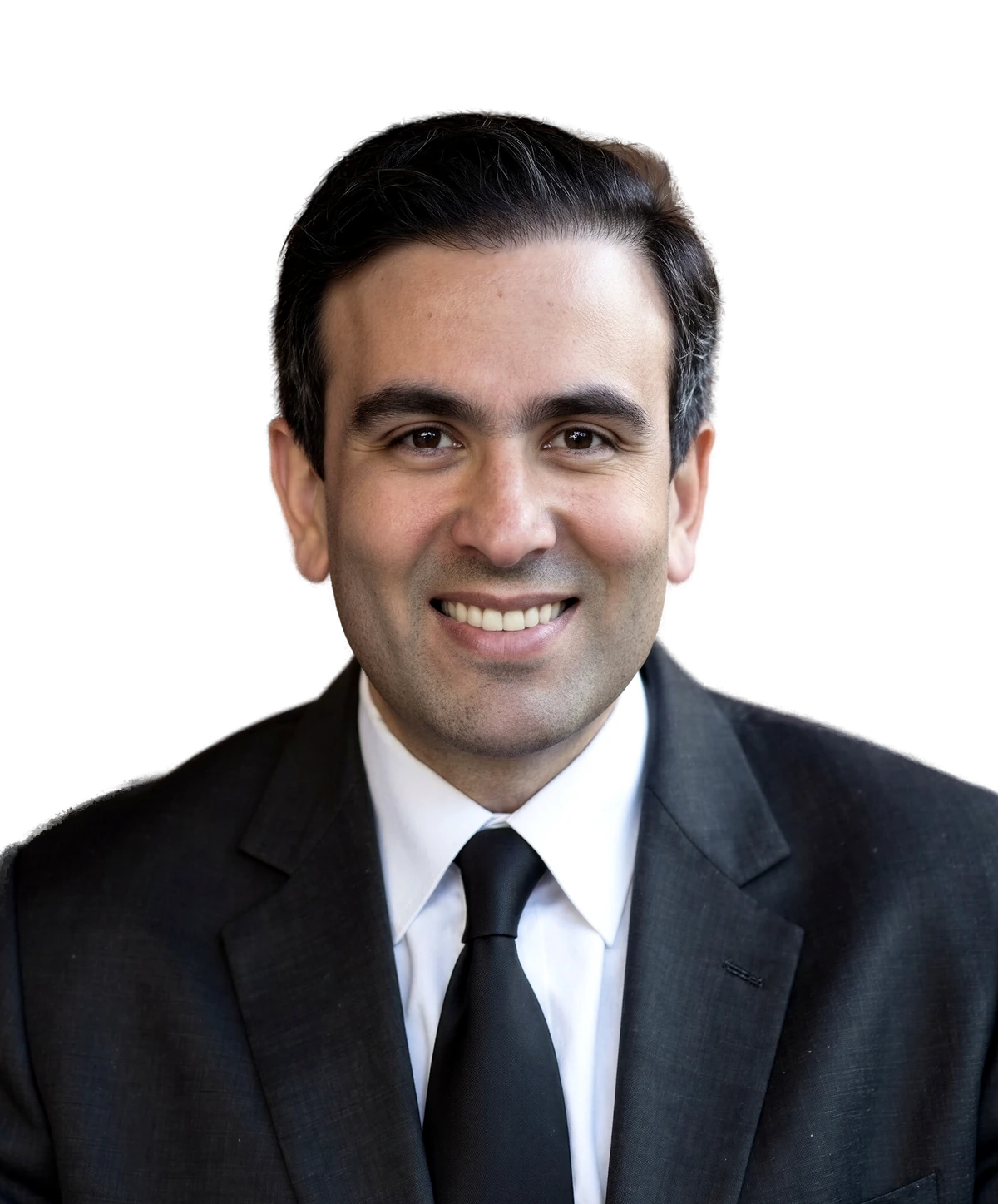
Barry S. Ranshi served as an Orleans Parish Assistant District Attorney and as staff attorney to an Orleans Parish Criminal Court judge, where he advised the court on evidence and procedure. Senior Partner John J. Mason, J.D., Ph.D. focuses on state and federal criminal defense, including white collar cases, and is licensed in Louisiana and Texas. Our team has handled white collar matters in both state and federal court.
You will not be left guessing. We explain what is happening at every step and answer your questions without legal jargon. Call (504) 905-8399, 24 hours a day, 7 days a week, for a free and discreet consultation.